2025 Wrapped up: The highlights and what's next
2025 moved quickly, and at times, it felt like the year barely paused long enough to catch its breath.
tldr Galileo adapts Scroll to Fusaka, enables support for the latest Solidity version 0.8.31. Reduces zkVM cycles by 50% through prover optimizations. Introduces a new fee structure that keep transaction fees low while implementing anti-spam measures, and prepares to migrate from l2-geth to l2-reth. Galileo, the third major
tl;dr Scoll just launched Ceno’s v0.1.0-rc.1 beta release. Ceno is a new high performing Risc-V zkVM capable of poving most Ethereum blocks. It uses a novel chip segmentation architecture for parallelism and GKR for non-uniformity. This results in significantly faster proving, smaller proof sizes, and
Getting an audit doesn't mean you're safe. In fact, 80% of projects that launch bug bounty programs had already been audited, often multiple times by top-tier firms. Yet security researchers still find critical vulnerabilities in these "secure" projects within their first year.
tl;dr Fusaka, Ethereum's next hardfork, is now live on Sepolia and targets a December Mainnet launch. The upgrade requires no action from users or developers. It includes important opcode and precompile changes, set to reduce gas costs and improve Scroll's ZK proving system. While Fusaka
The pilot of the Community Grants Support Program launched in September 2025, with the aim to promote the discovery of the Scroll ecosystem across various regions.
Points Program is, well, USX's points program, designed to reward early adopters.
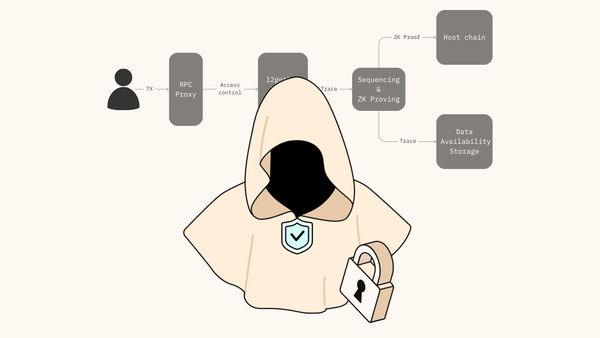
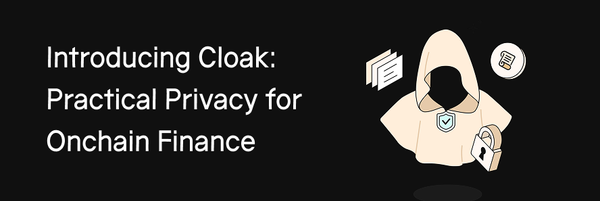
tl;dr Cloak brings privacy by default to the EVM with ZK proofs, while staying compatible with existing tooling. Its RPC Proxy keeps user data confidential and enables fine-grained, auditable access and controlled disclosures for regulators. Together, these features enable privacy in an institution-friendly Web3 environment. While EVM technology continues
Today's stablecoin landscape is fragmented, as users have to choose between yield-bearing tokens or spendable stablecoins like USDC or USDT which are usable in real life.
In the past year, stablecoin settlement on Ethereum surpassed $900 billion. This growth isn’t limited to crypto natives. Banks, fintechs, and payment processors are also exploring onchain rails for global money movement.
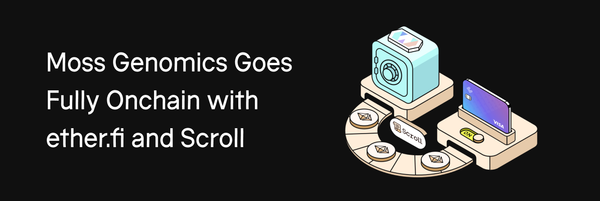
Moss Genomics Inc (CSE: MOSS | OTC: MSSGF), a publicly listed company with a formal Ethereum treasury strategy, has started using ether.fi Cash, powered by Scroll, to manage its corporate treasury and operational expenses.
Crypto‑native credit cards are bridging two parallel economies. The winning formula requires: security‑first blockchain infrastructure, predictable low‑latency low-cost execution, and fully autonomous chain architecture.